Showing posts with label opinion. Show all posts

Chrome OS: One Year Later

Wednesday, December 7, 2011

PhotoI never really imagined this day coming. But it's here. It's one year after Gadgetator's first post ever. So much has happened since them, and a big thanks goes out to Leo Laporte, host of the nationally syndicated Tech Guy radio show, on which Gadgetator got it's big boost. But enough about my blog. Let's get right to what this post's really about.

One year ago, on this day, I posted an article talking about Google's announcement of the Cr48, one of the major advancements in Google's Chrome OS operating system. If you are unfamiliar with what Chrome OS is, read the article here. In that article, I promised I would post a follow up after playing a bit with Chrome OS. I never did. Until now.

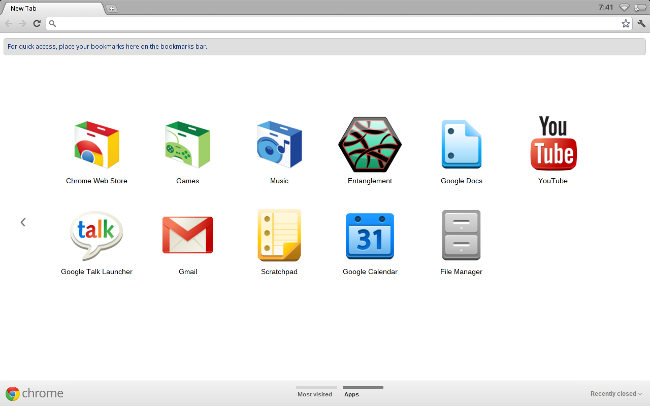
A lot has happened with Chrome OS in the past year. For example, a Chrome OS screenshot one year ago (see figure 1), as apposed to a Chrome OS screenshot today (see figure 2). After actually using a device running solely Chrome OS for close to half-a-year, I have developed a new opinion, and I'm here to share that. I guess this article is an overview of Chrome OS: one year later.

Figure 1
In a short recap of what was said in Gadgetator's first ever article, Chrome OS is basically a computer that only has a web browser. When you first open it up, you get your homepage, opening a new tab brings you to a page that basically contains a grid of glorified bookmarks. To a bunch of web pages. This all sounds great and all, but there's one major disadvantage. You lose all of your native applications. No more Photoshop, Microsoft Word, or iTunes. Everything you do has to be done online. Some might say that's impossible. That this'll never work. On first sight, one year ago, that's what I said. I quote myself saying, "There are great web apps out there, but I believe that for this to be a success, there need to be more great web apps. And until we get some of the most widely used native applications online, Chrome OS will be for the very light computer user."


Figure 2
After using Chrome OS almost exclusively for half-a-year, it's apparent I've changed my mind. You see, I was kind of pushed into using Chrome OS. Google offered its Cr48 to a limited number of beta testers to get feedback for the final product. I was one of those lucky recipients. 

Not wanting to just toss aside something  I received for free, plus taking into account what Google actually intended for me to do with the device, I decided to give it a fair try. I never really went back.

I was already stuck in the Google Universe. I used Gmail, Google Docs, Google Reader, and many other online alternatives to native desktop apps. As soon as I switched to Chrome OS, I found it surprisingly easy to find great online alternatives to any desktop apps that I need. Because I have a "real" computer, I could even print directly from Chrome OS using Cloud Print. Of course, I gave up some conveniences, but I believe that was a fair price to pay for the simplicity I now gained. No complex files, programs messing up your system, virus issues, or any other junk that comes along with a Windows or Mac computer. I couldn't have used this as my only computer, I still use iTunes regularly, but it definitely works a great, simple replacement.
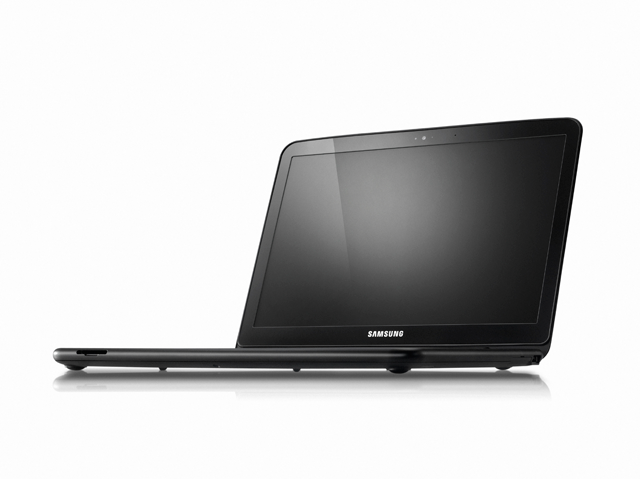
The Samsung Chromebook

Google now licences Chrome OS to manufacturers, who created their own 'Chromebooks'. Currently, both Samsung and Acer have a few models, which run from about $300-$450. At that price, it might be smarter to get a low-end Windows machine, but if you're willing to pay that price for simplicity's sake, it may be worth it. I think that, at this point, Chrome OS and the Chromebooks are great for either simple-computer users who don't want to be confused by the complexities of a "real" operating system, or to be used as a companion to a "real" computer, as Chrome OS has a clean interface, amazing boot time, and easy access to the web.  

Have you played with Chrome OS or the Cr48? Did you take the plunge and buy a Chromebook? What are your experiences with Google's Chrome OS? Like it? Drop a comment below with your experiences.

Guest Post: Choosing Home Broadband

Tuesday, November 8, 2011


Getting home broadband can be relatively easy to achieve just as long as you know what sort of deal or package you’re going to need in order to match it to what you like to do online. While there are seemingly a million and one different deals and offers out there in broadband-land, it’s not always that obvious which one is going to be right for your requirements. So, in order to simplify things, all you need to do is remember the following three pointers:

1. Before you sign up to any kind of high-speed internet deal it’s a great idea to do your research. The easiest way to do this is get online and compare and contrast the many different packages that are on the market. Don’t sign up for a deal that is bigger than what you need. So, for example, if you’re happy to do a bit of surfing, check emails and so on, then a smaller ‘lite’ style deal will be more than adequate. People who need to download lots of content, such as movies, meanwhile, should look for the beefier deals out there.

2. Read the small print associated with any of the deals or offers that you like the look of. You may find that the advertising blurb sells the package to you easily, but it’s not until you check the hidden details that you might spot stuff that will ruin the enjoyment of your new home broadband package. Limitations on the amount of data that you can download (and upload) is a common issue with some of the less powerful packages. If you’re going to be online and downloading a lot then this is a key issue to look out for.

3. Finally, explore what is involved in the package that you like the look of. Find out if all of the hardware and software comes included as part of the deal and if anyone will need to come to your house to set things up. If they do, ask if this is included in the price. Also keep an eye out for the sort of technology that is being used in your area, as some internet service providers  have a better infrastructure than others. Asking around your neighborhood, reading real consumer reviews and doing that homework before you sign on the dotted line can pay real dividends in the long run.

So, just as long as you pick through these three suggestions as you explore the available home broadband options in your area, then you will soon be on the right track to getting a high-speed broadband internet supply in your house. Remember that, at the end of the day, you are the customer, and any internet service provider that’s worth signing a contract for should, ideally, do everything they can to help you get set up as quickly and as cost effectively as possible.

Author Bio: Rob Clymo writes for www.broadbandgenie.co.uk and www.mobilephonegenie.co.uk, the online consumer advice portals for broadband, mobile broadband and mobile phones.


Guest Post: Top Smartphones of 2011

Friday, October 28, 2011

Guest post by Chris Pentago. Find Chris on Twitter and Google+.

With every passing year, mobile phones become more advanced. With the current smartphone craze, a newer and more powerful device is always right around the corner. As the year begins to wind down, we take a look at the best new mobile phones available.

Motorola Droid RAZR

Motorola Droid RAZRThe Droid RAZR represents a merging of two of the most iconic brands in the history of mobile phones. Many will recall Motorola's 2004 RAZR, the thinnest phone of its era. The Droid RAZR follows in its footsteps, measuring an incredibly thin 7.1 millimeters.The Droid RAZR runs Android 3.0 Gingerbread and is powered by the latest hardware. It has specs that tech fans drool over. The device features a 4.3 Super AMOLED Advanced display and dual-core processor. The phone also has a front-facing camera for video chat, and can shoot HD video. On top of all of this, Motorola coated the Droid RAZR with Kevlar and a splash guard, making the Droid RAZR resistant to spills.

Samsung Galaxy S2

Samsung Galaxy S2
 The international version of the Galaxy S2 has been available for some time overseas, but it just recently made its way to US carriers. The specs vary between carrier, but the theme remains the same: A massive screen that's around 4.5 inches, a dual-core processor, front and back cameras, and a thin build that's extremely sleek. The phone runs Android 3.0 with Samsung's TouchWiz skin and custom widgets, making the experience of using the device just a bit more friendly for the casual crowd. For anyone who's not on Verizon and can't get the Droid RAZR, the Galaxy S2 is their best bet for a thin phone with a beautiful screen and slim build.

Google and Samsung Galaxy Nexus

Samsung Galaxy NexusGoogle and Samsung have teamed up once more for the latest Nexus device from Google. The Galaxy Nexus sports the features everyone would expect, such as a dual-core processor and front-facing and rear-facing cameras. A few things set it apart from the rest, though. For starters, it has a 4.6" Super AMOLED screen capable of displaying HD video. It has what Google calls a contour display, meaning the screen is slightly curved allowing for easier use. Perhaps most importantly, it is the first device to run what Google calls Ice Cream Sandwich, otherwise known as Android 4.0. Android 4.0 features an overhauled user experience that is faster and sleeker, and requires no physical buttons on the device. Because of this, the Galaxy Nexus is going to be on the cutting edge of both hardware and software.

Apple iPhone 4S


Apple iPhone 4SThe latest iPhone continues to help set the standard when it comes to ease of use, speed and form factor. The device builds on the beautiful design standards established by the iPhone 4 but throws a faster, dual-core processor into the mix along with a much improved camera. The iPhone 4S also includes Apple's proprietary voice recognition software, Siri. Siri lets users operate the device with their voices instead of fingers. Those looking for a reliable and simple smartphone experience can't go wrong with the iPhone 4S.

There are new mobile phones being released constantly. None will last forever before the next great thing comes out, however, these devices are among those with specs that will last for the long haul. All of these devices are available now or will be by the end of November, making them a great pick for the holiday season. Which one would you pick? Tell us in the comments below.

Guest Post: Caring For your Smartphone

Friday, October 7, 2011

Guest post by Vanessa Burke

When you're ready to make the commitment to your first smartphone, it's a good idea to learn how to care for it properly to make your investment last as long as possible. Smartphones like the Galaxy S2 cell phone, for instance, may be crafted of different material than you're used to which can require a different type of care than a standard phone. 

Many cell phones are housed in traditional metal casings, but some like the Galaxy S2 are made of a more cost-effecient plastic, chosen for its light weight and thin size. Because of this difference in design, these phones require additional measures to keep them free from damage. Here are some tips to help ensure your phone lasts a long time and keeps looking good while you have it. 

Use a case or belt clip to prevent scratches and scuffs. While the material used for cell phones is much more resilient than it may look, it's still a good idea to protect the surface by placing your phone in a case or keeping it secure on your belt. Dropping it in a purse, or carrying it in a pocket along with keys, nail clippers, a knife and other gadgets, can cause unnecessary damage and mar the housing. 

To clean your smartphone, use a soft lint-free cloth like you would use to clean your eyeglasses. Never use household cleaners or harsh cleansers as they can scratch your phone. Instead, spritz some distilled water on your cloth, not directly on the phone, and gently wipe away the dirt. Use a Q-tip to get into the crevices and isopropyl alcohol, if needed, for the keyboard or casing. 

Guard your phone as you would your computer, your iPod, or any other device that can be easily damaged. Tossing it around, frequently dropping it, or abusing it in other ways can shorten the life of your phone and damage it beyond repair. 

Remember the Geico commercial that shows a Humphrey Bogart wannabe who asks the question, "Can switching to Geico really save you 15 percent or more on car insurance?" The actor then asks, "Do people use smartphones to do dumb things?" And of course, since the answer is yes, we see three guys who look like idiots doing just that in a variety of ways. 

While we can laugh at the commercial, there is a lesson to be learned. Be smart about protecting your smartphone. Protect it like you would any other investment you've made. 

Ask Gadgetator: 3D on Tablets

Tuesday, July 26, 2011

Ever had something you wanted an extra opinion on. Or maybe you just want some help getting along in this ever complex world of technology. Here's your chance to Ask Gadgetator. Send any tech related questions to gadgetatorblog@gmail.com, and type "Ask Gadgetator" in the subject line, and your question may be featured in a Ask Gadgetator post.

This question comes from "technologyftw" and deals with 3D on phones and tablets.

Question: What do you think of 3D on the G-Slate? Should tablets move towards head-tracking 3D or the kind of 3D on the Evo 3D and Thrill 4G. -technologyftw

Answer: 3D itself seems sort of gimmicky. It’s great in theaters, and okay on a 50 or 60 inch television. Smaller than that, just doesn't really work well. The most obvious reason that 3D gets better as it the picture gets bigger, is because 3D really needs to fill your field of view.

In real life, your entire vision is seen in 3D. This seems natural. Once you get it down even to a theater size, It seems less natural, because the 3D you are seeing onscreen is different that the 3D that the chair in front of you is. “Artificial 3D” is more 3D seeming than what you see in real life. Therefore the sudden change from artificial to natural 3D can look unnatural.

Television 3D is worse. With a theater, at least it fills up the majority of your field of view. With a TV, it only fills up a small part of your field of view, so the transition between artificial and natural 3D is less natural looking.

Once you get down to the 3 or 4 inch screens on a phone, or even the 9 or 10 inch screens on a tablet, the 3D just won’t look as good. It barely fills your field of view, and therefore just doesn’t look natural.

Movie theaters, 3D is good, TV’s, it’s okay, but on a phone or tablet, 3D is just a gimmick to make you buy the product.

My answer to your question is that tablets should not move towards head tracking or any other kind of 3D, and should stick with the good old two dimensions that we have grown to know and love.


Search This Blog

Subscribe to Gadgetator by eMail

Most Popular

About the Author

Elazar Krausz founded Gadgetator in December 2010, and has been writing there ever since. To find out more, click below.
Online Marketing
Add blog to our blog directory.